Among the many masters of ukiyo-e,
few figures remain as quietly mysterious as Tōshūsai Sharaku.
He appeared suddenly,
left behind a striking body of work,
and disappeared without explanation.
His career lasted less than a year—
between 1794 and 1795.
And yet, within that brief moment,
he created images that still feel unusually present today.
The Theater of Edo
Sharaku focused almost entirely on kabuki actors.
In Edo, kabuki was more than entertainment.
It was a shared experience—lively, emotional, and deeply rooted in daily life.
Prints of actors were widely collected.
They celebrated fame, beauty, and theatrical presence.
Most artists portrayed actors as they were meant to be seen—
refined, composed, and idealized.
Sharaku chose a different path.
Not Beauty, but Presence
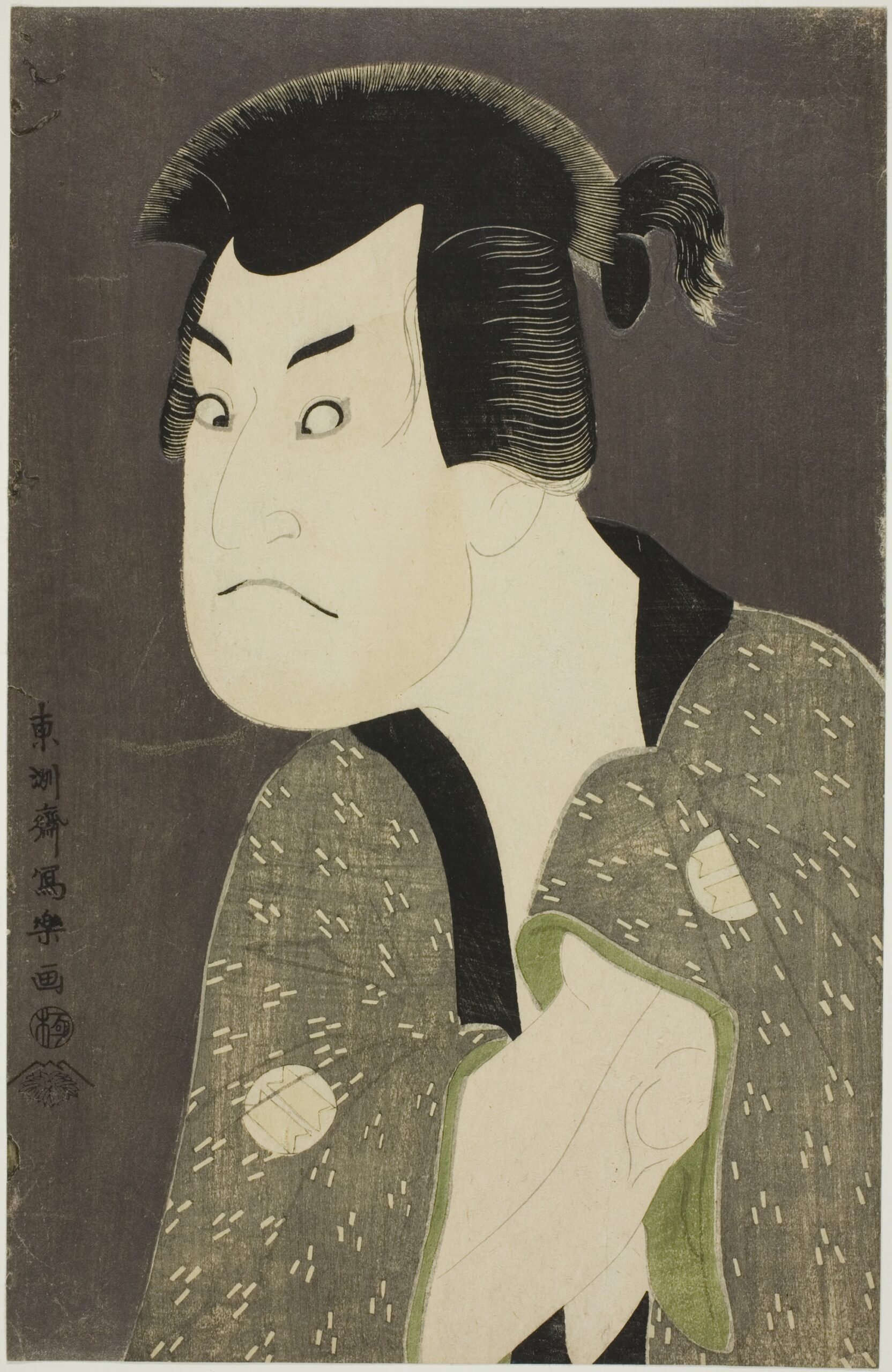
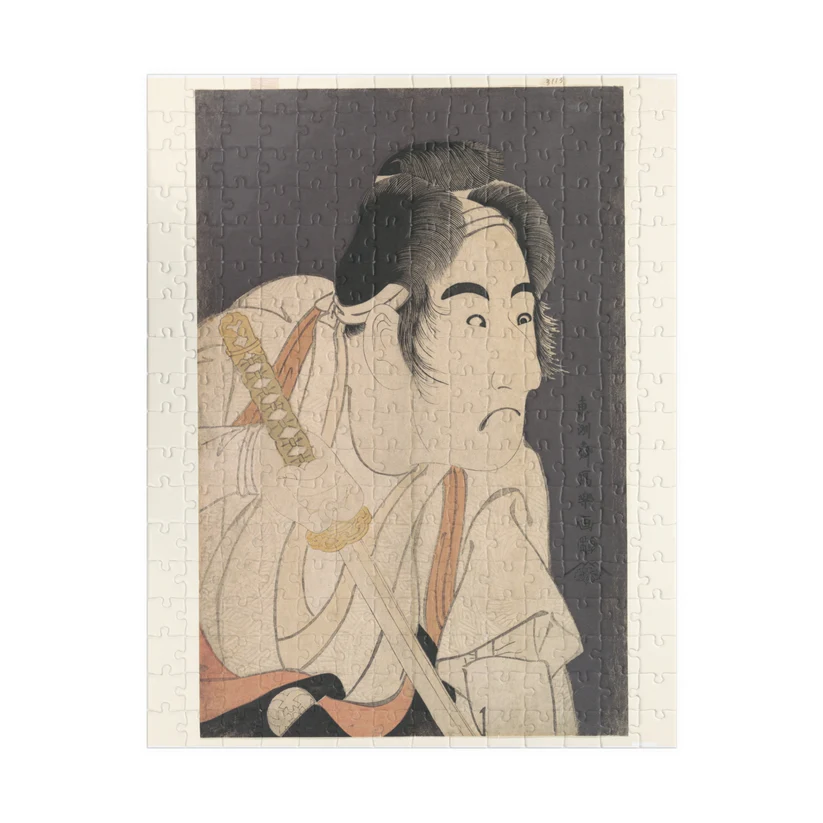
In Sharaku’s work, the faces feel closer.
Expressions are heightened.
Eyes narrow.
Brows tighten.
Mouths hold tension.
These are not polished images.
They are moments.
Within each face, something unsettled appears—
a trace of emotion that seems to exist just beyond performance.
Pride.
Strain.
Confidence.
Doubt.
He does not simply show the actor.
He reveals something beneath.
Between Role and Self
Sharaku’s portraits seem to exist in a quiet in-between.
Not fully within the role,
and not entirely outside it.
It is the moment when performance softens—
just enough for something real to emerge.
A slight shift.
A subtle imbalance.
And in that brief instant,
the distance between actor and person begins to disappear.
A Sudden Disappearance
After producing around 140 prints,
Sharaku vanished.
No clear records explain why.
Some believe his work was too unconventional for the time.
Others suggest he may have been connected to the theater itself—
perhaps someone who understood actors from within.
There are even theories that Sharaku was not a single person at all.
His identity remains unknown.
Rediscovery
During his lifetime, Sharaku was not widely celebrated.
But over time, his work was rediscovered—
and slowly understood.
Today, he is considered one of the most distinctive portrait artists
in the history of Japanese art.
His prints are no longer seen as unusual.
They are seen as honest.
A Quiet Legacy
Sharaku did not leave behind a long career.
He left something smaller—
and perhaps more lasting.
A collection of faces.
Moments held in tension.
Expressions that do not resolve.
Even now, they remain.
The stage may have ended.
But the faces stay with us.
And in their stillness,
the drama continues.

コメント