2026-03

Ukiyo-e Figures

Tōshūsai Sharaku — The Face Beneath the Actor

Among the many masters of ukiyo-e,few figures remain as quietly mysterious as Tōshūsai Sharaku.He appeared suddenly,left behind a striking body of work,and disappeared without explanation.His career lasted less than a year—between 1794 and 1795.And yet, within that brief moment,he created images that still feel unusually present today.
Ukiyo-e Landscapes

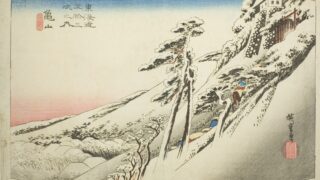
Kameyama — Weather Clearing After Snow

Among the many landscapes created by Utagawa Hiroshige, few capture the subtle atmosphere of winter as beautifully as “Kameyama — Weather Clearing After Snow.”This print belongs to Hiroshige’s famous seriesThe Fifty-three Stations of the Tōkaidō,a collection depicting the landscapes, weather, and daily life along Japan’s historic road connecting Edo (Tokyo) and Kyoto.While some prints in the series are dramatic — filled with heavy rain, wind, or bustling travelers — this scene is quieter.
Ukiyo-e Landscapes

Katsushika Hokusai — The Artist Who Captured Waves and Mountains

Few artists in Japanese history are as widely recognized as Katsushika Hokusai.Working during the Edo period, Hokusai transformed the art of woodblock printing by bringing dramatic movement, powerful landscapes, and everyday life into a new visual language that continues to influence artists around the world.
Ukiyo-e Figures

Kitagawa Utamaro — The Quiet Genius of Beauty

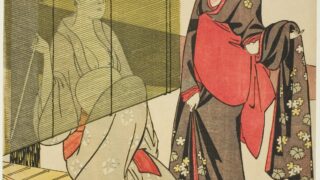
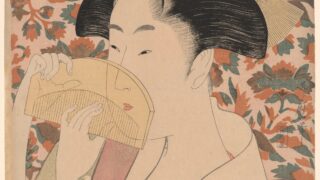
Among the masters of Ukiyo-e, few artists transformed the image of beauty as profoundly as Kitagawa Utamaro.Working during the late Edo period, Utamaro became famous for his elegant portraits of women, known as bijin-ga — “pictures of beautiful people.”But Utamaro did not simply paint beauty.He studied expression.He observed gesture.He explored personality.
未分類

The Quiet Landscapes of Utagawa Hiroshige

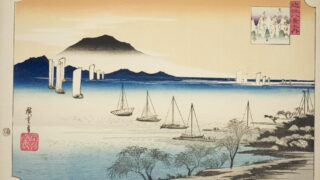
Among the great masters of Japanese woodblock printing, few artists captured atmosphere and emotion as gently as Utagawa Hiroshige. While many artists of the Edo period focused on dramatic scenes or theatrical subjects, Hiroshige found inspiration in quieter moments—mist rising over rivers, travelers crossing bridges, or distant mountains fading into evening light.
Ukiyo-e Figures

The Enigma of Sharaku — The Face of Kabuki in Ukiyo-e

Among the many masters of ukiyo-e, few figures remain as mysterious as Tōshūsai Sharaku.In the long history of Japanese woodblock prints, Sharaku appeared suddenly, created a remarkable body of work, and then vanished just as quickly.His career lasted only about ten months between 1794 and 1795.Yet during that brief moment, Sharaku produced some of the most powerful portraits ever seen in Japanese printmaking.Most ukiyo-e artists of the Edo period sought elegance and beauty in their subjects.Sharaku did something entirely different.He revealed character.
Ukiyo-e Landscapes

Moonlight and Distance: Hiroshige’s Autumn Moon at Ishiyama

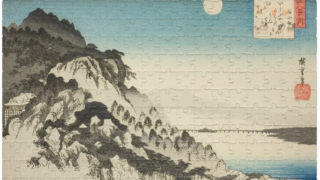
Among the most poetic landscapes created by Utagawa Hiroshige, Autumn Moon at Ishiyama reveals how silence itself can become the subject of art.This print belongs to the classical landscape theme Eight Views of Ōmi, a group of scenes centered around Lake Biwa.For centuries, these locations were celebrated in poetry and painting. Each view captures not just a place, but a particular atmosphere — a moment when landscape, season, and time of day align.In this composition, Hiroshige chooses one of the most contemplative settings:the autumn moon rising above Ishiyama-dera.
Ukiyo-e Landscapes

The Quiet Power of the Sea in Hokusai’s World

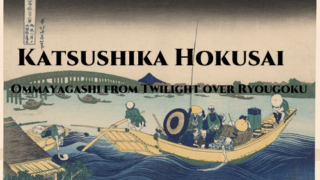
In the art of Katsushika Hokusai, the sea is never merely background.It breathes, moves, and shapes the lives of those who depend upon it.Hokusai lived during Japan’s Edo period, a time when travel expanded and landscapes became central themes in art. While many artists depicted famous places as landmarks, Hokusai approached the natural world differently. His compositions rarely feel static. Waves curl forward, boats lean into the wind, and distant mountains hold their quiet presence against a shifting sky.
Ukiyo-e Figures

Utamaro — The Quiet Intelligence of Beauty

Before beauty becomes decoration,it is observation.Before a face becomes idealized,it is studied.Kitagawa Utamaro did not paint women as symbols.He painted them as presences.In late eighteenth-century Edo,where pleasure districts defined fashion and fantasy,Utamaro turned his attention inward.