
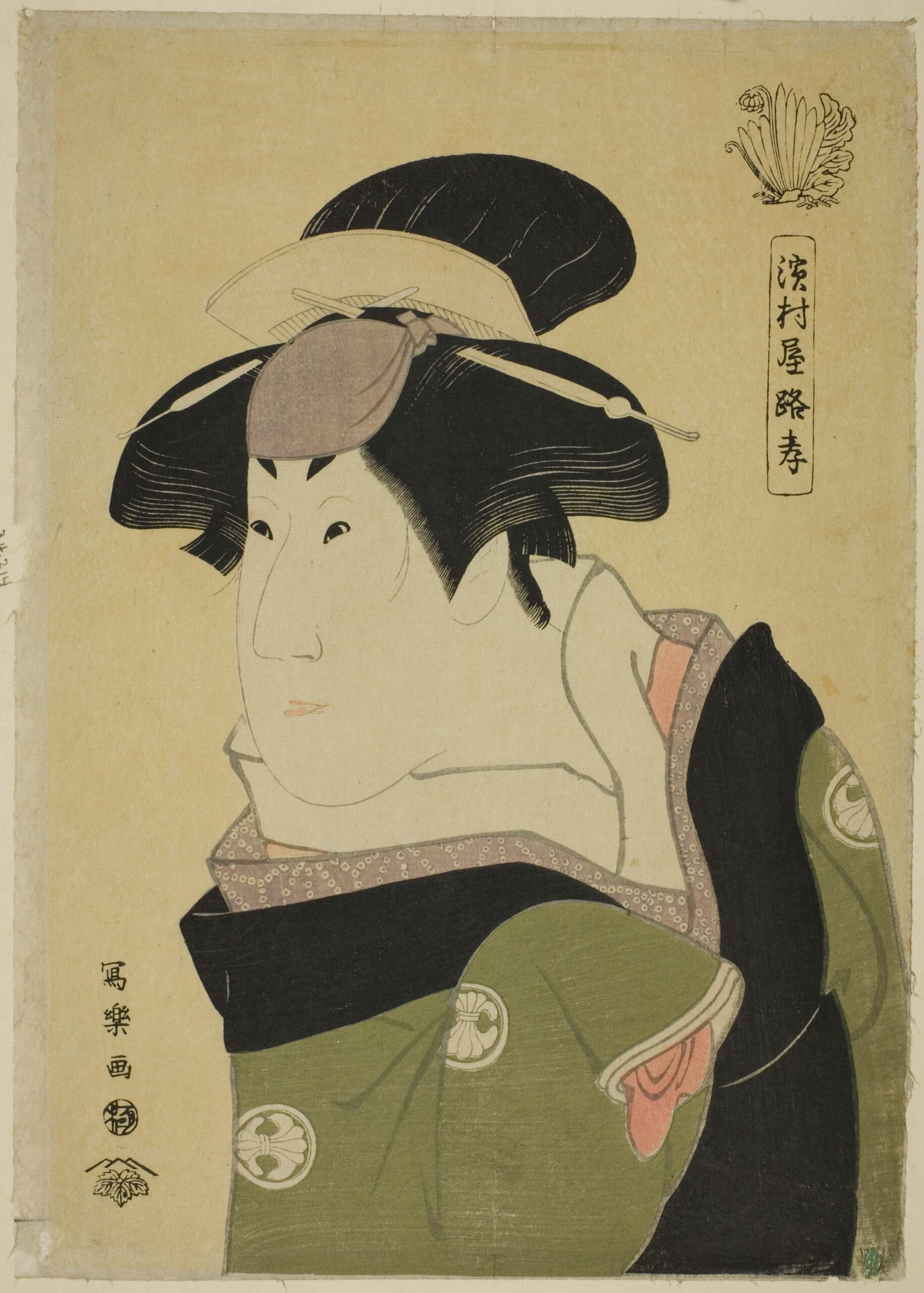
Tōshūsai Sharaku’s portraits are unsettling for a simple reason.
They do not behave like portraits.
Most ukiyo-e actors pose.
Sharaku’s actors observe.
Their eyes are sharp, unblinking, and uncomfortably aware.
Even today, viewers often report the same sensation:
the feeling that the image is looking back.
A Portrait That Refuses to Be Silent
In Edo Japan, kabuki actor prints were popular entertainment.
They celebrated famous performances and exaggerated expressions.
Sharaku did something different.
He stripped away elegance.
He exaggerated tension instead of beauty.
He painted faces at the moment before control breaks.
Wrinkles tighten.
Eyes narrow.
Mouths hold expressions just a fraction too long.
These are not faces meant to be admired calmly.
They are faces caught watching.
The Gaze as the Subject
Unlike other ukiyo-e masters, Sharaku did not flatter his subjects.
He exposed them.
Many researchers believe Sharaku captured psychological truth rather than physical likeness.
But another interpretation lingers — quieter, and darker.
What if Sharaku was not painting actors at all?
What if he was painting the act of looking itself?
In many of his works, the eyes dominate the composition.
They pull the viewer inward.
They refuse to let go.
The longer you stare,
the harder it becomes to tell who is observing whom.
Disappearance and Unease
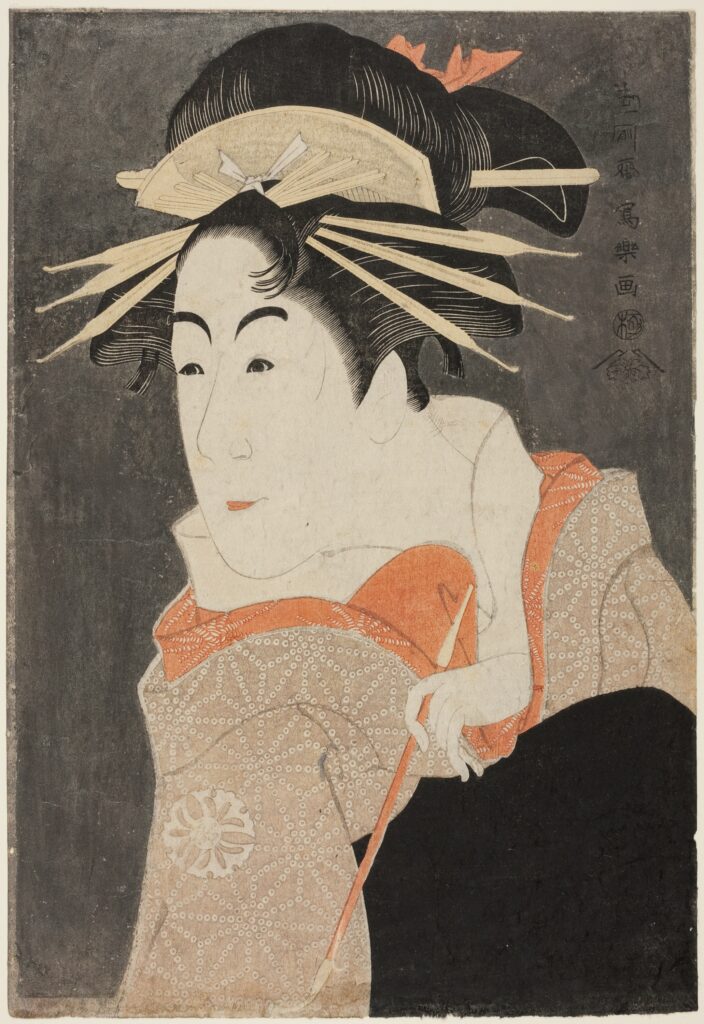
Sharaku’s career was brief.
After producing a striking series of actor portraits, he vanished from history.
No clear records explain why.
Some say his style was too harsh.
Others believe the public rejected what felt too honest.
But the unease remains.
Art that merely depicts can be ignored.
Art that watches cannot.
Why Sharaku Still Feels Modern
Sharaku’s works feel strangely contemporary.
They resemble close-ups.
Psychological studies.
Moments frozen under pressure.
In a world saturated with faces and screens,
Sharaku’s gaze feels familiar — and threatening.
To be seen is no longer passive.
It is exposure.
Sharaku understood this centuries ago.
A Silent Question
Sharaku’s portraits do not tell stories.
They ask questions.
Who is performing?
Who is watching?
And what happens when the image notices you first?
This is why Sharaku belongs not only to art history,
but to the shadows between observer and observed.
Some images are not meant to move.
But some were never meant to be harmless.
🎥 Related Video
“The Eye That Never Looks Away — Sharaku’s Watching Gaze”
(10-second opening + NoLang narration, Supernatural Zone)
コメント