
— The Unsettling Faces That Still Watch Us
Among all ukiyo-e artists of the Edo period,
no one feels more disturbing, more mysterious, or more modern than Toshusai Sharaku.
Sharaku’s career lasted less than ten months.
In that brief time, he produced some of the most unforgettable portraits in Japanese art — and then vanished without explanation.
Why do his faces feel so uncomfortable?
Why do his eyes seem to follow us?
Sharaku’s portraits are not meant to soothe. They are meant to confront.
Sharaku Did Not Paint Beauty — He Exposed It
Sharaku is best known for his large-head portraits of kabuki actors.
But unlike the elegant, idealized actor prints of his contemporaries, Sharaku showed something else entirely.
- Strained facial muscles
- Twisted mouths
- Sharp, unsettling eyes
- Expressions caught in moments of tension
These are not heroic portraits.
They feel more like psychological snapshots, taken when the actor’s mask begins to slip.
Sharaku did not celebrate fame —
he revealed what lay beneath it.
Why Sharaku Was Rejected in Edo
In Edo-period Japan, actor prints were commercial art.
Audiences wanted their favorite stars to look handsome, dignified, and glamorous.
Sharaku refused.
He depicted anxiety, arrogance, fatigue, and obsession —
emotions that were never meant to be seen.
As a result, his work was unpopular.
Within a year, Sharaku disappeared from the art world entirely.
The silence surrounding his departure only deepened the mystery.
Who Was Sharaku?
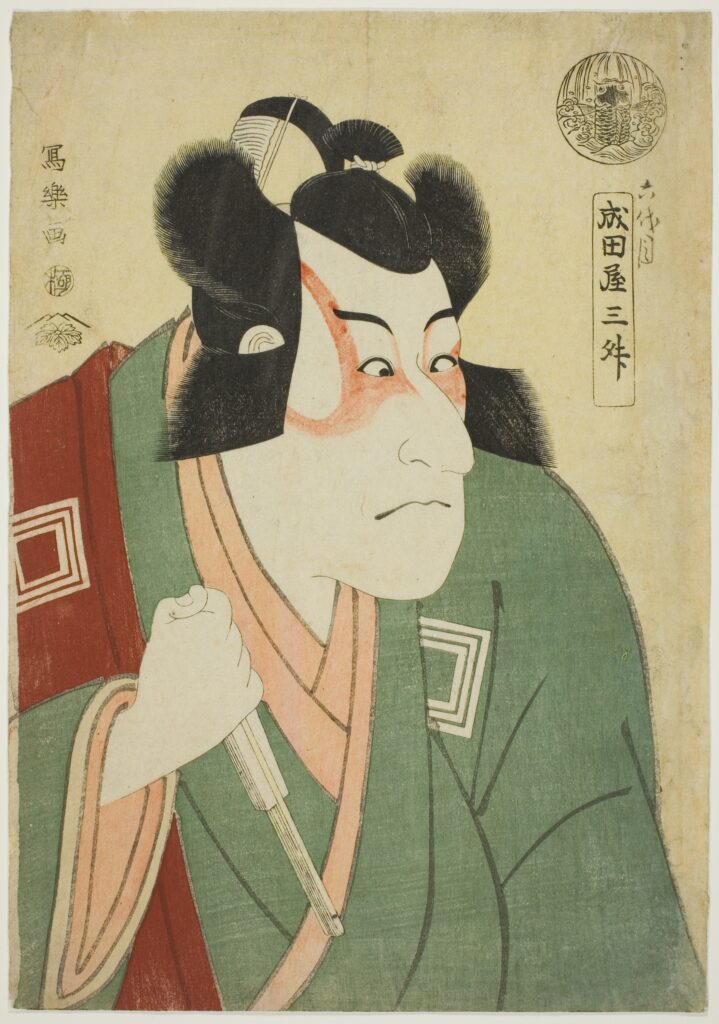
More than two centuries later, Sharaku’s identity remains unknown.
Theories include:
- A Noh actor
- A collective of artists
- A fictional persona created by a publisher
- A deliberate artistic experiment
None have been proven.
But one truth remains clear:
Sharaku was not painting appearances — he was dissecting human emotion.
Long before modern psychology, he was already there.
Why Sharaku Feels So Modern
Today, Sharaku feels more relevant than ever.
We live behind masks — social media profiles, public roles, curated identities.
Sharaku’s portraits capture the moment those masks crack.
That is why his images feel unsettling.
They reflect expressions we recognize, but rarely admit.
To look at Sharaku is to be looked at in return.
Assembling Sharaku, Piece by Piece
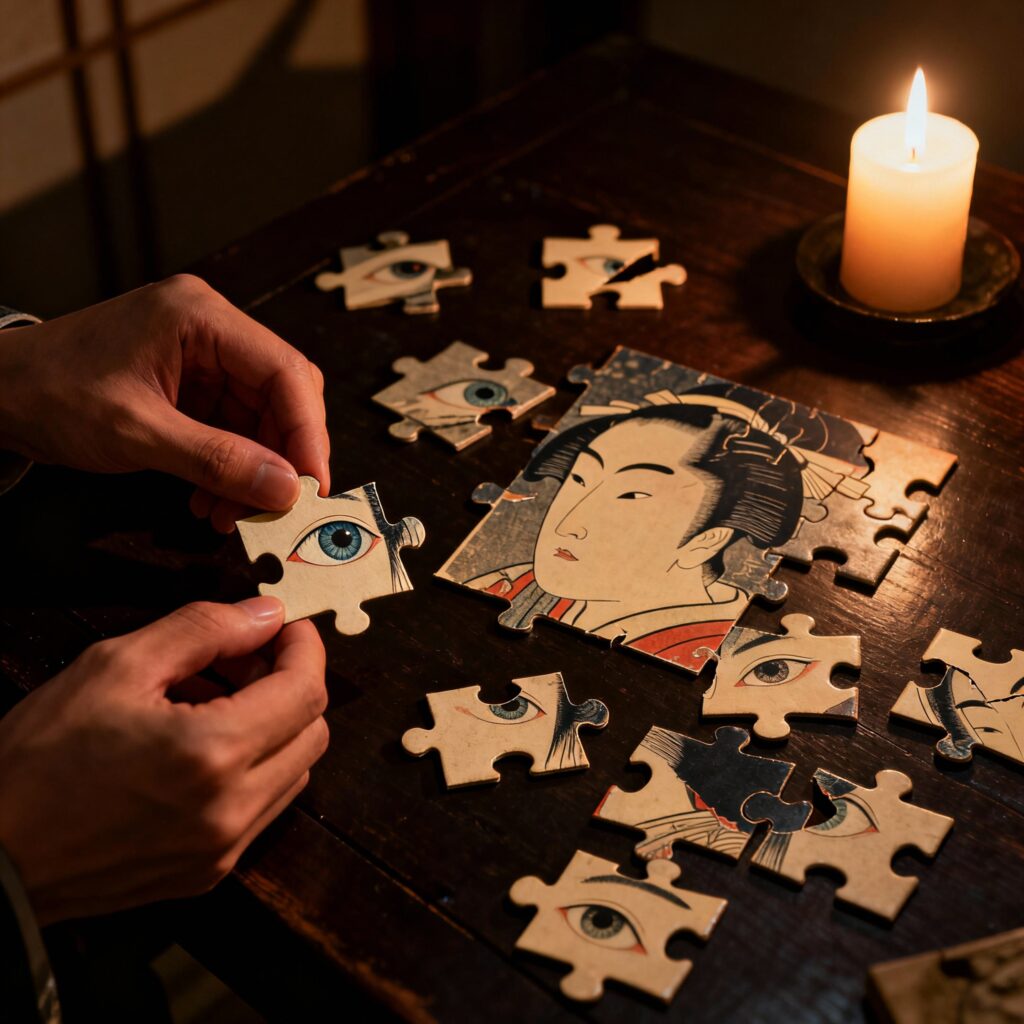
When Sharaku’s works are transformed into jigsaw puzzles, the experience changes entirely.
- A gaze slowly emerges
- A tense mouth takes shape
- The face assembles itself — piece by piece
The result is not comfort, but confrontation.
Once completed, the image no longer feels historical.
It feels disturbingly alive.
Which Story Will You Face Next?
- Sharaku — fear hidden in a single glance
- Utamaro — obsession with beauty
- Hokusai — nature and unseen forces
- Hiroshige — journeys through memory and myth
Each artist opens a different door.
The question is — which one are you ready to open?
📂 Category
Ukiyo-e Figures
🏷️ Tags
Sharaku, Ukiyo-e, Edo Period, Kabuki, Portraits, Japanese Art, Supernatural Zone

コメント