There are artists who decorate the world.
And then there are artists who expose it.
Sharaku belonged to the second kind.
Active for less than a year in 1794–1795, Sharaku appeared suddenly in Edo’s vibrant print culture — and vanished just as quickly. In that brief window, he created some of the most psychologically intense portraits in ukiyo-e history. His subject was not landscape, not beauty, not serenity.
It was the human face under pressure.
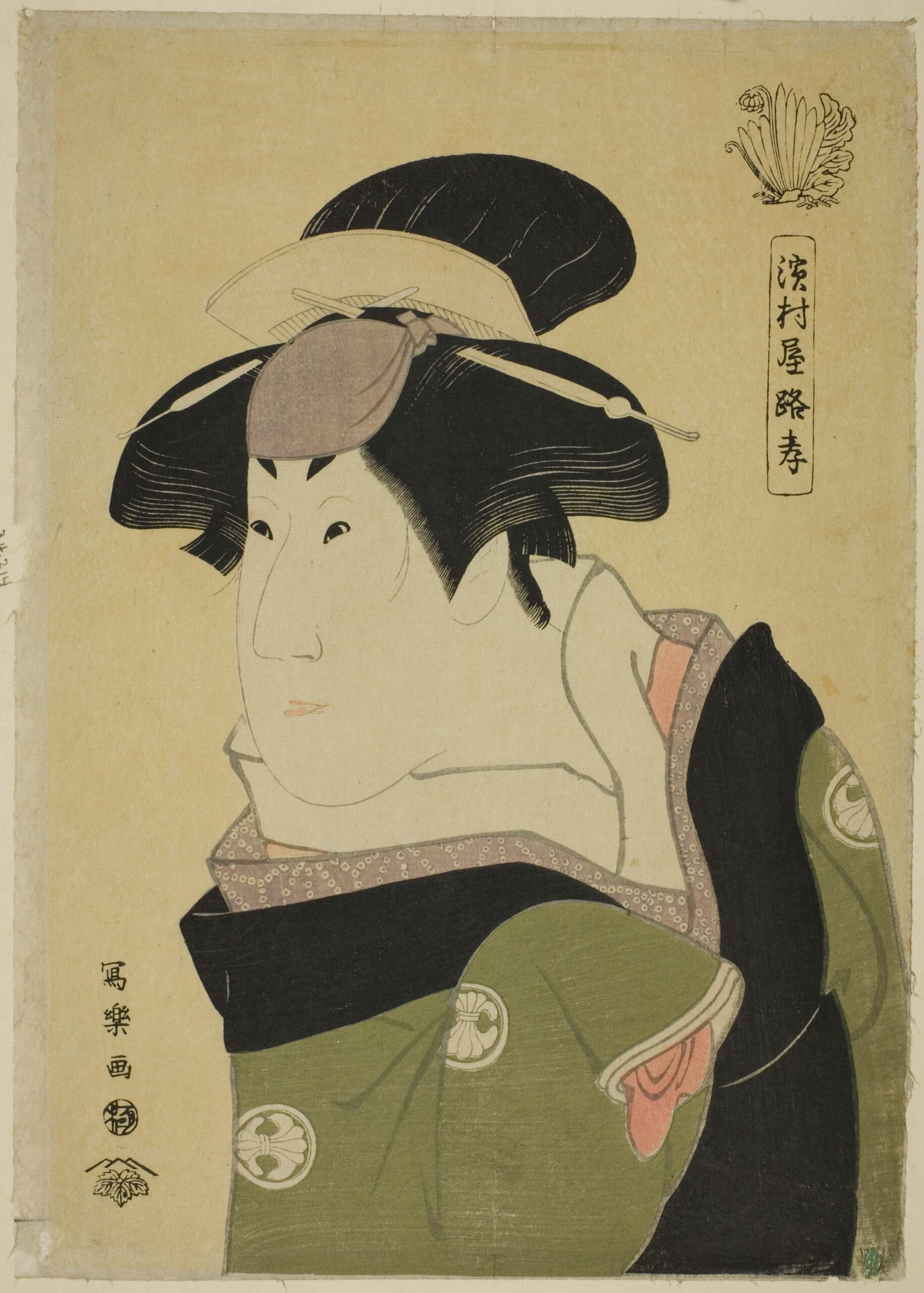
Sharaku is best known for his actor prints — close-up portraits of Kabuki performers captured at moments of emotional tension. A narrowed eye. A tightened jaw. Fingers frozen mid-gesture. These were not idealized likenesses. They were revelations.
Unlike many ukiyo-e artists who softened features to please audiences, Sharaku exaggerated them. He sharpened cheekbones, deepened wrinkles, extended hands into expressive forms. The result was uncomfortable for some viewers of his time. The prints did not flatter actors; they interpreted them.
And interpretation carries risk.
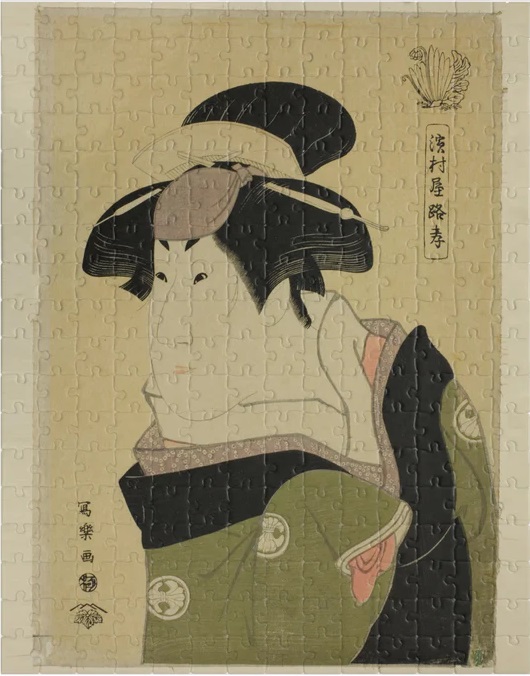
His compositions are bold and direct. Figures often fill the frame, set against dark mica backgrounds that shimmer subtly but do not distract. There is little environment, little narrative context. The focus remains on expression — on the moment before or after a dramatic line is delivered.
It is theater, distilled.
But Sharaku’s work goes beyond documentation of performance. These portraits feel almost modern in their psychological intensity. They suggest that identity itself is layered — actor and role, mask and self, public persona and private strain.
Who was Sharaku? The mystery remains unresolved. Some believe he was connected to Noh theater. Others suggest he may have been a collective pseudonym. His disappearance only deepened the intrigue.
Yet perhaps the mystery is secondary.
What matters is the gaze.
Sharaku looked at performers not as icons, but as human beings inhabiting exaggerated emotion. He captured the tension between display and vulnerability. Between performance and truth.
In doing so, he created something rare in ukiyo-e: confrontation.
His prints do not invite passive admiration. They demand attention. They hold the viewer in place — just as a stage spotlight holds an actor at center.
Today, Sharaku’s works feel strikingly contemporary. In an age of curated images and controlled personas, his portraits remind us that expression cannot always be polished smooth.
Sometimes it must remain raw.
And in that rawness, we find something enduring.
Not beauty.
But presence.
コメント