Ukiyo-e Figures

Ukiyo-e Figures

Sharaku — The Artist Who Appeared, Looked Back, and Vanished

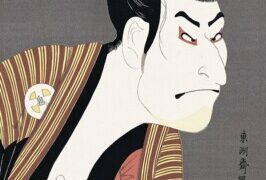
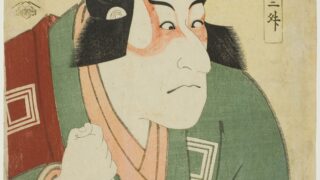
Among the masters of ukiyo-e, Tōshūsai Sharaku stands apart.Not because of longevity.Not because of volume.But because of silence.Sharaku’s entire known body of work appeared suddenly in 1794 — and disappeared just as quickly, within less than a year. In that brief window, he produced some of the most unsettling and psychologically direct portraits in Japanese art history.
Ukiyo-e Figures

Kitagawa Utamaro — Not Beauty, but the Moment Before It Speaks

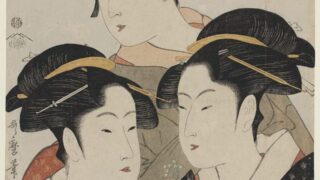
The women in ukiyo-e are often called beautiful.But beauty was never Utamaro’s final subject.What Kitagawa Utamaro captured was something quieter —a presence that exists just before expression takes form.His figures rarely meet the viewer’s gaze.A mouth softens, a head tilts slightly,a thought seems to pause before becoming language.Utamaro did not paint ideals.He left traces of becoming.
Ukiyo-e Figures

Tōshūsai Sharaku: The Artist Who Refused to Flatter

Among the masters of ukiyo-e, no artist feels as modern — or as unsettling — as Tōshūsai Sharaku.His works do not invite comfort.They confront.Where others softened faces and idealized beauty, Sharaku exposed tension, fatigue, and psychological strain. His actors are caught mid-expression: lips tight, eyes sharp, gestures awkward or exaggerated. These are not portraits meant to please. They are moments meant to reveal.
Ukiyo-e Figures

Kitagawa Utamaro — The Artist Who Painted What Beauty Felt Like

Kitagawa Utamaro is often described as a painter of beautiful women.But that description is incomplete.Utamaro did not simply record appearances.He explored perception — how beauty is seen, sensed, and quietly judged.In Edo-period Japan, beauty was everywhere.In teahouses.On streets.Behind paper screens.
Ukiyo-e Figures

Tōshūsai Sharaku — The Artist Who Appeared, Shocked Edo, and Vanished

In the late Edo period, a mysterious artist emerged without warning and disappeared just as abruptly. His name was Tōshūsai Sharaku.Unlike other ukiyo-e artists who pursued beauty and elegance, Sharaku painted something far more unsettling: faces caught in tension, distortion, and raw emotion.
Ukiyo-e Figures

The Quiet Power of Beauty — Kitagawa Utamaro and the Gaze That Never Rests

Utamaro is remembered as the master of bijin-ga—portraits of beautiful women. Yet to call his work merely “beautiful” is to miss its unsettling depth. His women do not simply pose. They observe. They exist in a moment just before movement, just after thought, suspended between being seen and seeing back.
Ukiyo-e Figures

Tōshūsai Sharaku — The Artist Who Looked Too Deep

In the late 18th century Edo, ukiyo-e artists were expected to flatter their subjects.Actors were heroic. Faces were elegant. Expressions were controlled.Sharaku did the opposite.His portraits confront the viewer.Eyes bulge. Mouths twist. Hands claw the air.These are not idealized actors — they are moments of exposure, when performance slips and something human, even unsettling, appears.Sharaku’s works feel less like illustrations and more like psychological snapshots.
Ukiyo-e Figures

Kitagawa Utamaro and the Quiet Psychology of Beauty

In the refined yet restless world of Edo-period Japan, beauty was not merely decoration — it was observation, tension, and presence. Among all ukiyo-e masters, Kitagawa Utamaro stands apart for the way he transformed female portraits into psychological landscapes.Utamaro did not simply depict women.He studied how beauty exists when it is seen.
Ukiyo-e Figures

The Enigma of Edo: Toshusai Sharaku and the Faces That Stare Back

Among all ukiyo-e artists, Toshusai Sharaku stands apart as the most unsettling—and perhaps the most modern.Active for o...
Ukiyo-e Figures

Utamaro’s Obsession with Beauty

— The Hidden Psychology Behind Ukiyo-e WomenIntroduction: Utamaro and the Mystery of BeautyKitagawa Utamaro is celebrate...