

In the floating world of Edo, beauty was everywhere — in fashion, in gesture, in fleeting glances across a room.
But no artist observed it as closely, or as quietly, as Kitagawa Utamaro.
Utamaro did not paint battles.
He did not dramatize landscapes.
He studied faces.
More precisely, he studied presence.
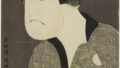
In his celebrated bijin-ga — pictures of beautiful women — Utamaro narrowed the frame.
He brought the viewer closer.
Closer than most ukiyo-e artists had dared.
The background often dissolves.
What remains is expression:
a tilt of the head,
a half-lowered eyelid,
a hand pausing mid-motion.
These women are not symbols.
They are not distant icons of elegance.
They breathe.
Utamaro lived in a city alive with theater, poetry, and pleasure quarters.
The Yoshiwara district, in particular, became both subject and stage.
Yet rather than exaggerate glamour, he refined it.
He gave individuality to faces that might otherwise have been treated as decorative types.
Look carefully and you will notice something radical:
no two expressions are the same.
He understood that beauty is not symmetry alone.
It is interior.
The curve of a neck.
The tension in a wrist.
The quiet between two thoughts.
Utamaro’s lines are slender, almost fragile.
His colors soften rather than shout.
Even in elaborately patterned kimono, the emphasis returns to the face — to the psychology beneath ornament.
In later years, his work drew the attention of authorities.
Depictions of historical figures in ways deemed inappropriate led to punishment and temporary imprisonment.
The floating world was not entirely free.
And yet, his vision endured.

Centuries later, Western artists studying Japonisme were captivated by these intimate compositions.
The close cropping, the asymmetry, the focus on mood rather than narrative — all would echo through modern art.
Utamaro did not simply portray women.
He changed how viewers encounter them.
He shifted ukiyo-e from spectacle to study.
Where others showed the world in motion,
Utamaro showed it in pause.
A moment before speech.
A thought half-formed.
A beauty that does not announce itself — but reveals itself.
In that quiet revelation lies his genius.
He reminds us that art need not be loud to be lasting.
Sometimes, the smallest gesture holds the longest echo.
コメント