Ukiyo-e Landscapes

Ukiyo-e Landscapes

Utagawa Hiroshige — The Art of Passing Time

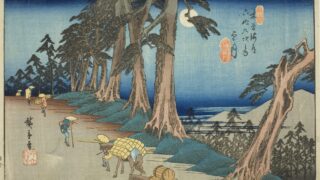
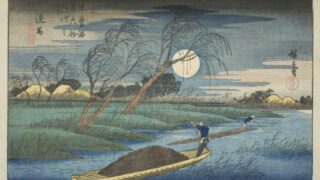
Hiroshige did not paint heroes.He did not chase dramatic moments or decisive action.Instead, he chose what passes.Rain crossing a bridge.Snow settling on a road at dusk.Travelers moving quietly through wind and mist.In the ukiyo-e world, Hiroshige stands apart not because his scenes are grand, but because they are gentle. His landscapes rarely demand attention. They invite patience.
Ukiyo-e Landscapes

The World Seen Quietly — Katsushika Hokusai and the Art of Continuation

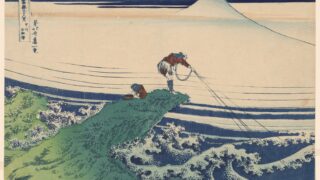
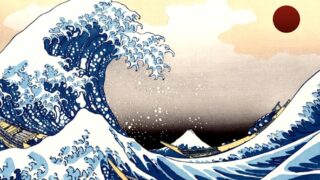
When people hear the name Katsushika Hokusai,they often think of one image — a towering wave, frozen at the moment before impact.But Hokusai’s world was never about a single moment.It was about continuation.
Ukiyo-e Landscapes

Utagawa Hiroshige — The Artist Who Let the World Breathe

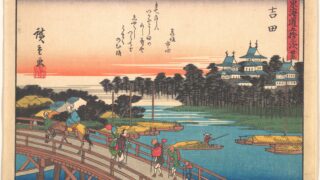
Utagawa Hiroshige did not paint the world as something to conquer.He painted it as something already alive.While many artists of the Edo period focused on people, drama, or power,Hiroshige turned his attention to roads, weather, rivers, and distance.Not as backgrounds — but as the main subject.
Ukiyo-e Landscapes

Katsushika Hokusai — Landscapes That Continue Beyond Time

Katsushika Hokusai is often remembered for movement.Waves that rise.Clouds that twist.Lines that seem alive.Yet what truly defines Hokusai’s work is not motion alone, but time.In his landscapes, time does not rush.It stretches, pauses, and quietly observes human life from a distance.
Ukiyo-e Landscapes

🖼️ Hiroshige — The Art of the Passing Moment

When people speak of ukiyo-e, they often think of bold waves or dramatic motion.Hiroshige chose another path.He painted what passes.A sudden rain shower.Footsteps fading on a bridge.Snow falling before anyone notices it has begun.Hiroshige’s landscapes are not monuments.They are moments already leaving.
Ukiyo-e Landscapes

Hokusai — The Artist Who Never Stopped Moving

Katsushika Hokusai was not simply a master of ukiyo-e.He was an artist who used drawing to rethink the world itself. Waves, mountains, clouds, people—everything in his work is alive. Even in still images, time seems to surge forward. That sensation of motion is the core of Hokusai’s art.
Ukiyo-e Landscapes

Where Does the Road Lead at Night?

Hiroshige and the Landscapes That Stand Between WorldsIn Edo Japan, roads were never just routes for travel.They were lines drawn between day and night, safety and uncertainty, this world and something beyond it.No artist understood this quiet tension better thanUtagawa Hiroshige.
Ukiyo-e Landscapes

The World of Katsushika Hokusai

Katsushika Hokusai is often remembered for a single image — The Great Wave.But to see Hokusai only as a painter of waves is to miss his true obsession.Hokusai did not paint nature as scenery.He painted nature as a living force — one that observes, reacts, and sometimes threatens those who stand before it.In Edo-period Japan, mountains were not merely landforms.The sea was not passive water.And Mount Fuji was never silent.
Ukiyo-e Landscapes

Utagawa Hiroshige — The Poet of Travel and Seasons

When people think of ukiyo-e, they often imagine dramatic waves, heroic figures, or bold compositions. Utagawa Hiroshige, however, followed a quieter path.His art does not shout — it whispers.Hiroshige was an Edo-period ukiyo-e master best known for his landscape prints. Rather than focusing on legendary heroes, he depicted weather, roads, rivers, and ordinary people. His works feel less like pictures and more like moments in time, gently preserved on paper.
Ukiyo-e Landscapes

Katsushika Hokusai — Why His Art Still Shakes the World Today

More than 200 years have passed since the Edo period,yet the works of Katsushika Hokusai continue to resonate across cul...