
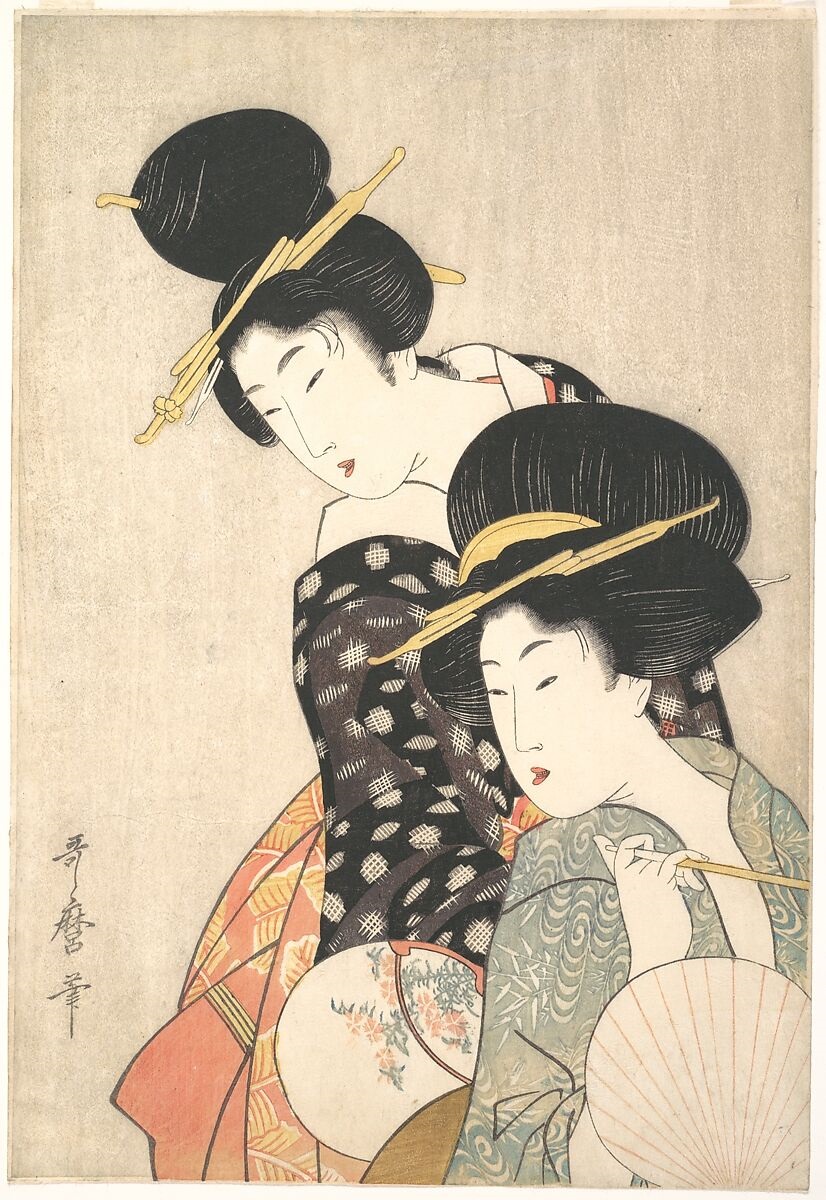
In Edo Japan, beauty was not loud.
It did not shout, perform, or demand attention.
It waited.
And no artist understood this stillness better than Kitagawa Utamaro.
Utamaro is remembered as the master of bijin-ga—portraits of beautiful women. Yet to call his work merely “beautiful” is to miss its unsettling depth. His women do not simply pose. They observe. They exist in a moment just before movement, just after thought, suspended between being seen and seeing back.
Beauty as Presence, Not Decoration
Unlike earlier ukiyo-e artists, Utamaro broke away from idealized faces. He elongated necks, narrowed eyes, softened gestures, and focused obsessively on subtle expressions. These were not generic beauties. They were individuals shaped by mood, tension, and inner life.
A slight tilt of the head.
A hand touching fabric.
Eyes that seem to hesitate.
Utamaro painted the psychological space of beauty.
His women feel aware—aware of themselves, aware of the viewer, aware of the fragile balance between admiration and intrusion. This is why his portraits feel intimate, almost uncomfortable. You are not simply looking at them. You are entering their silence.
The Dangerous Line Between Admiration and Obsession
Edo society consumed images of beauty voraciously. Courtesans, fashion, and ideals of femininity circulated like modern media. Utamaro lived inside this culture—but he also exposed its tension.
Many viewers sense something unsettling in his work:
a stillness held too long,
a gaze that does not release you.
Some critics argue that Utamaro was painting the moment when beauty becomes aware of being watched. In that awareness lies both power and vulnerability. His women are admired, yet never passive. They hold their own gravity.
Beauty, in Utamaro’s hands, is not comfort.
It is presence.
Edo Women Beyond Fantasy
Utamaro’s subjects were often courtesans, but he treated them with unusual humanity. He depicted fatigue, boredom, confidence, melancholy—emotions rarely granted space in idealized art.
These were women navigating social roles, expectations, and invisible rules. Utamaro did not rescue them from that world. He documented its emotional cost.
In doing so, he transformed ukiyo-e from entertainment into observation.
Why Utamaro Still Feels Modern
Centuries later, Utamaro’s work feels strikingly contemporary. We live in an age of constant images, endless admiration, and quiet pressure to be seen.
His portraits ask a timeless question:
What happens when beauty knows it is being watched?
That question lingers.
And it follows you long after you look away.
📍 Ukiyo-e Utamaro
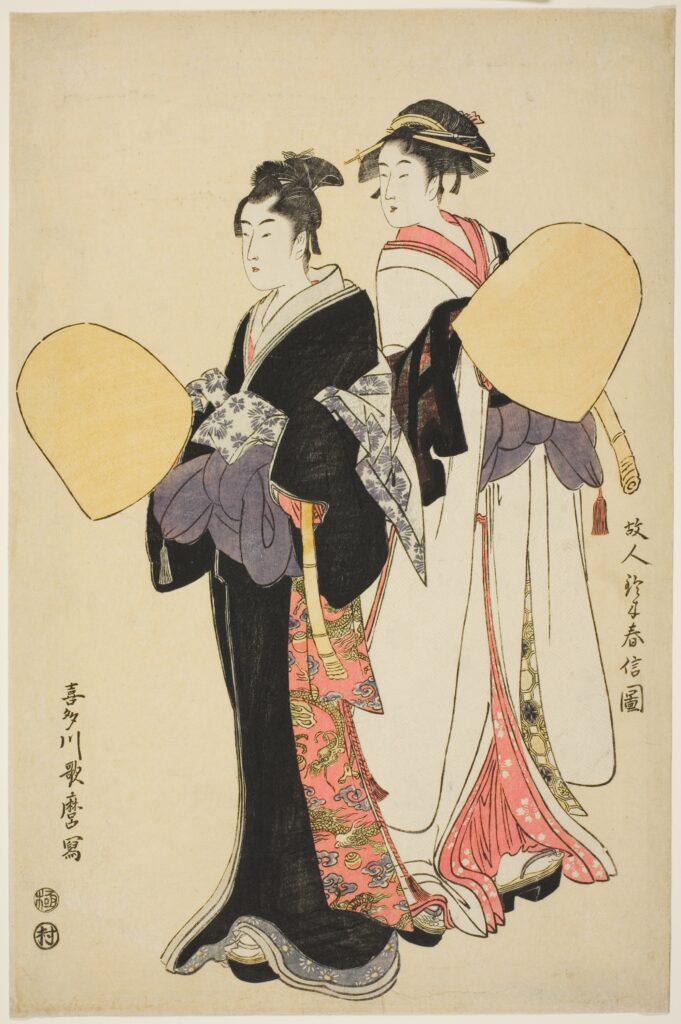
Utamaro did not paint women as objects of desire.
He painted the moment desire becomes self-aware.
And that is why his silence still speaks.


コメント