
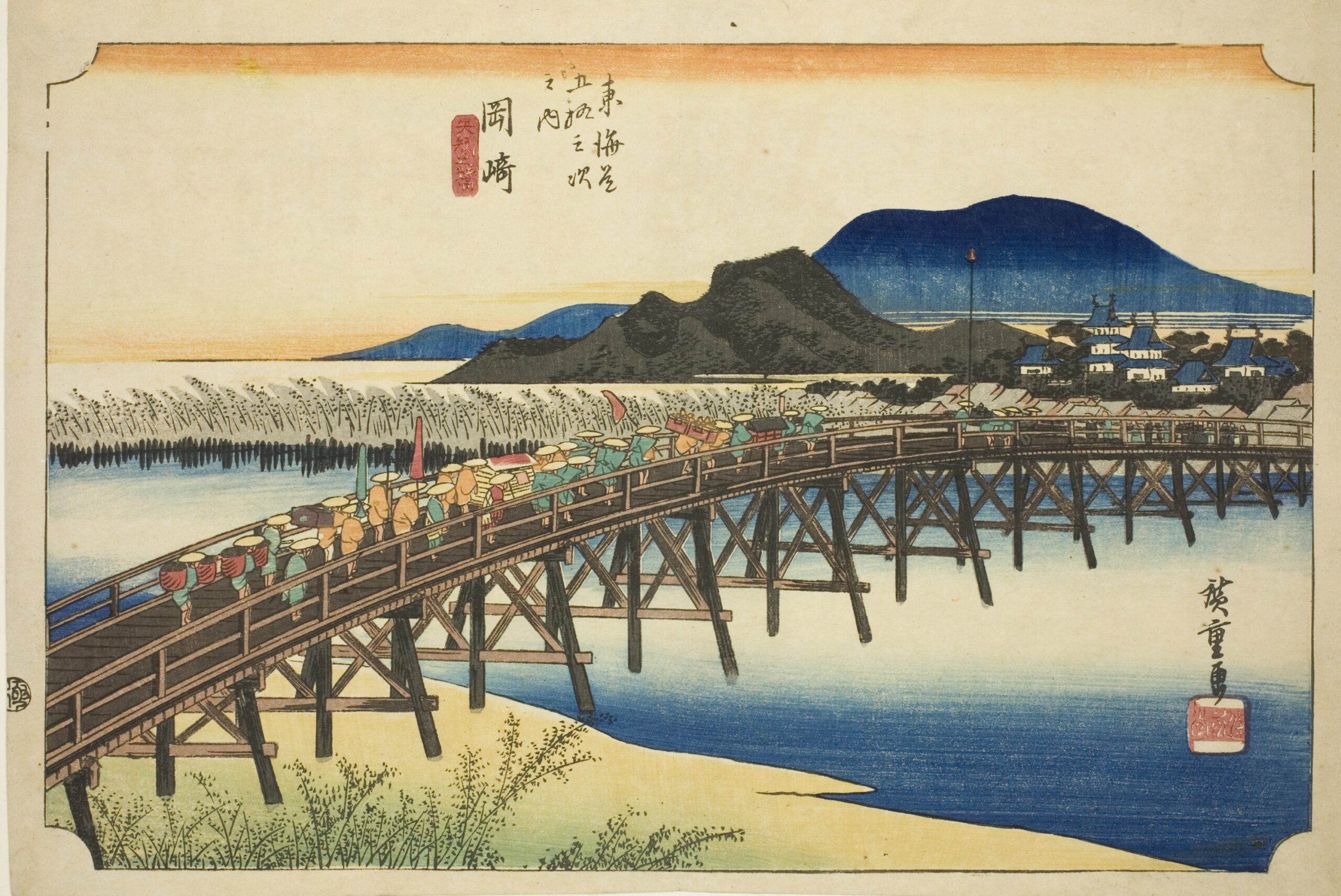
A quiet journey through the landscapes of Utagawa Hiroshige, where roads, weather, and time gently pass.
The Landscapes of Utagawa Hiroshige
In the world of ukiyo-e, landscapes were once considered secondary to portraits of actors and courtesans.
Yet today, when people think of Japanese scenery in art, one name quietly stands above the rest — Utagawa Hiroshige.
Hiroshige did not paint dramatic moments.
He painted moments that were already passing.
A Painter of Roads, Weather, and Time
Hiroshige is best known for his landscape series, especially The Fifty-three Stations of the Tōkaidō.
Rather than presenting famous landmarks as symbols of power or prestige, he focused on what travelers actually experienced:
- Sudden rain on the road
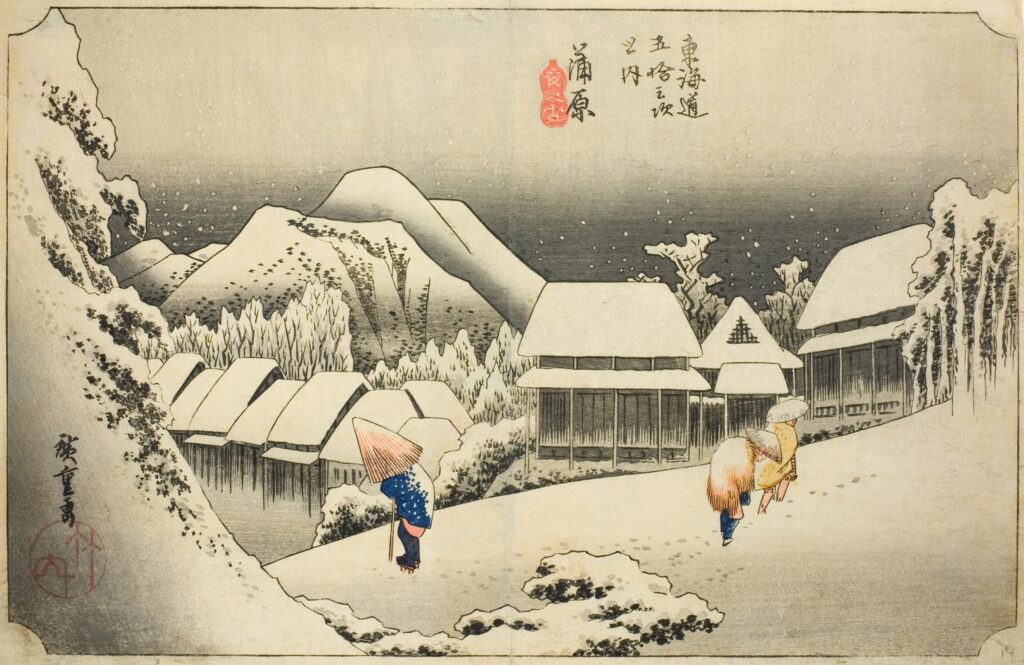
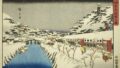
- Snow falling at dusk
- Wind bending trees and clothes
- People walking, resting, waiting
These scenes feel almost accidental — as if we are quietly standing beside the artist, watching life unfold.
Why Hiroshige’s Landscapes Feel So Modern
What makes Hiroshige timeless is not technical brilliance alone, but his sense of atmosphere.
Unlike earlier landscape artists, Hiroshige often placed human figures small and unobtrusive.
Nature is not a backdrop — it is the main presence.
His use of:
- soft color gradation
- bold cropping
- empty space
creates images that feel closer to modern photography than to classical painting.
This is why Hiroshige later influenced Western artists such as Monet and Van Gogh, who were deeply inspired by his compositions.
Snow, Rain, and Night — Hiroshige’s Favorite Subjects
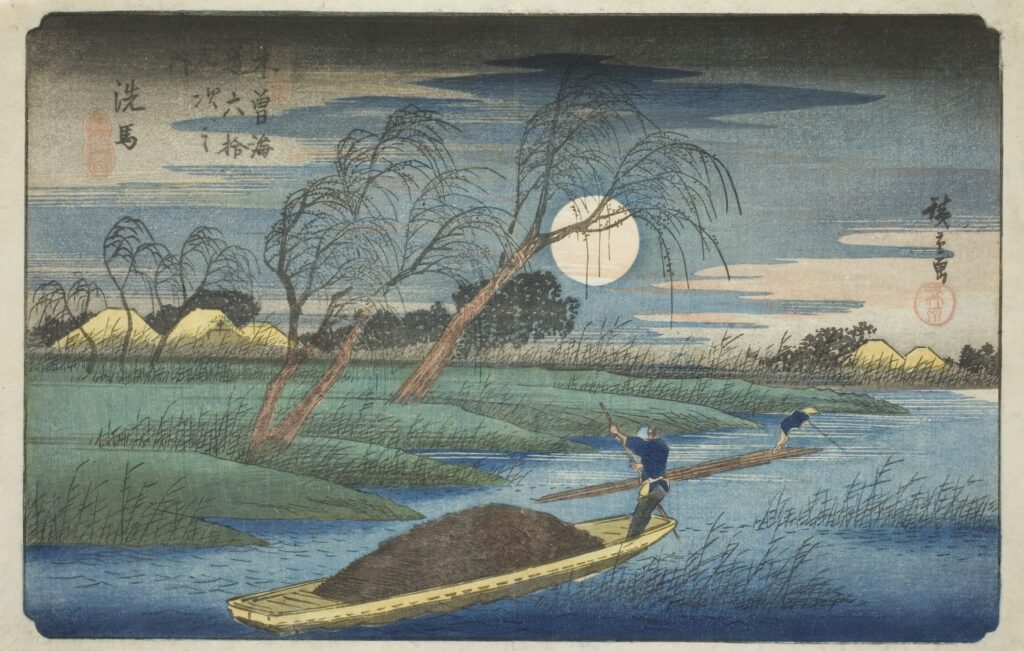
Hiroshige rarely depicted clear, perfect days.
Instead, he preferred:
- snowfall that muffles sound
- rain that blurs outlines
- night scenes lit by lanterns
These conditions transform ordinary places into emotional spaces.
The viewer is not simply looking — they are standing inside the scene.
Landscapes as Quiet Stories
Each of Hiroshige’s prints tells a story, but never explicitly.
A lone traveler crossing a bridge in the rain.
A village half-hidden by snow.
A road disappearing into mist.
Nothing dramatic happens — and that is precisely the point.
Hiroshige reminds us that beauty often exists in:
- routine
- movement
- silence
From Edo Roads to the Modern Home
Today, Hiroshige’s landscapes continue to resonate because they offer something rare:
calm without emptiness.
As jigsaw puzzles or art pieces, his works invite slow engagement.
Piece by piece, the road appears.
The rain begins to fall.
The journey unfolds quietly in your hands.
Final Thoughts
Hiroshige did not paint heroes or legends.
He painted walking, waiting, and weather.
And perhaps that is why his landscapes still speak to us —
not as memories of the past, but as reflections of our own daily lives.
📌 About the Artwork
- Artist: Utagawa Hiroshige
- Period: Edo period (19th century)
- Style: Ukiyo-e landscape prints
コメント