Among the masters of ukiyo-e, no artist feels as modern — or as unsettling — as Tōshūsai Sharaku.
His works do not invite comfort.
They confront.
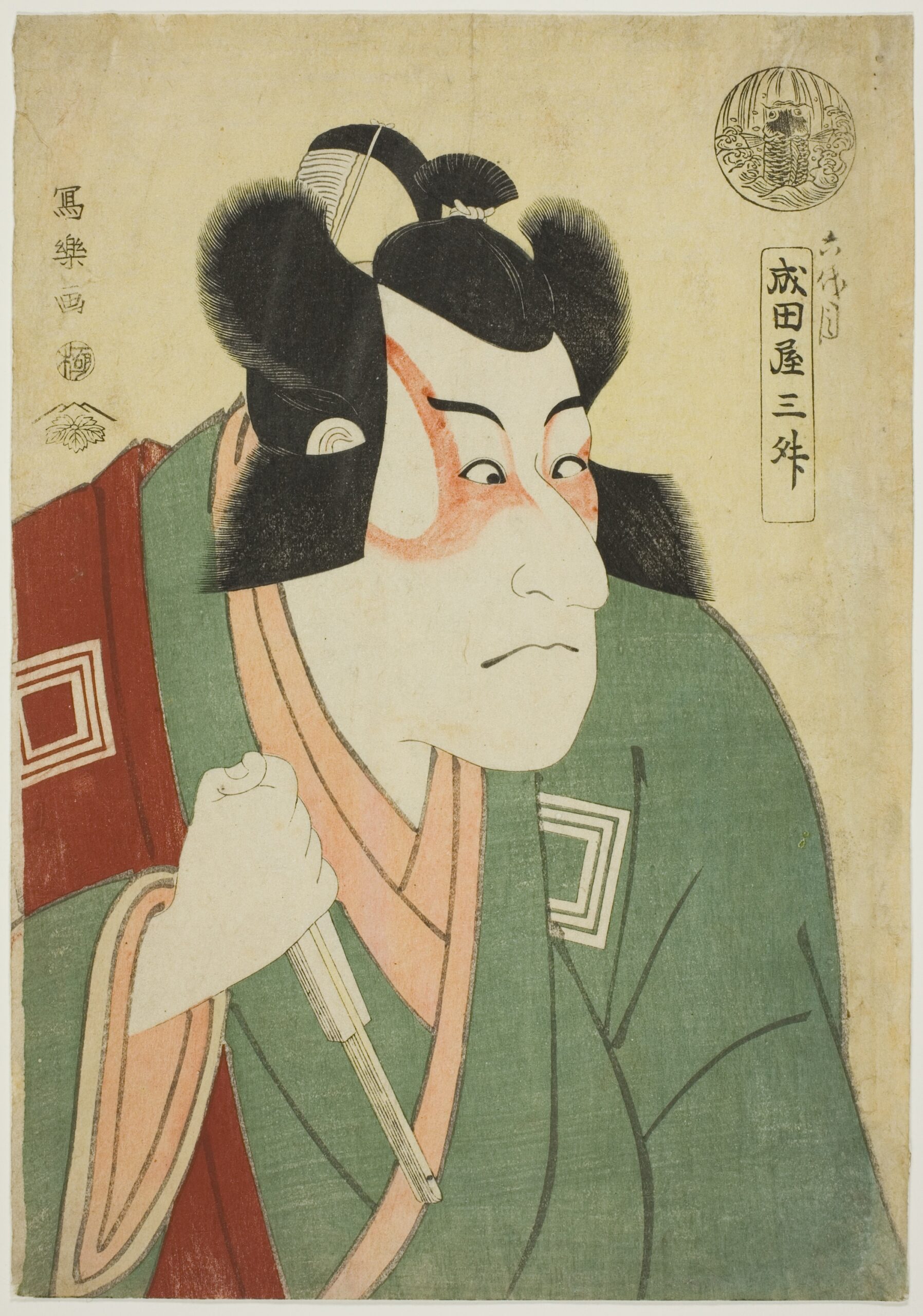
Where others softened faces and idealized beauty, Sharaku exposed tension, fatigue, and psychological strain. His actors are caught mid-expression: lips tight, eyes sharp, gestures awkward or exaggerated. These are not portraits meant to please. They are moments meant to reveal.
A Sudden Appearance — and Disappearance
Sharaku’s career was astonishingly brief.
He appeared suddenly in Edo around 1794, produced a powerful body of actor portraits within roughly ten months, and then vanished without explanation.
No letters.
No diary.
No confirmed identity.
This mystery is not a side note — it is part of the work’s gravity. Sharaku feels less like a historical figure and more like an interruption in art history.
Faces as Psychological Landscapes
Sharaku painted kabuki actors, but not as heroes.
He captured them between roles, when performance cracks and humanity shows through.
Hands curl unnaturally.
Brows arch with strain.
Mouths twist into expressions that feel almost intrusive to witness.
In these prints, the face becomes a landscape of pressure — social, emotional, and performative. Long before modern portraiture explored inner life, Sharaku was already there.
Rejection in His Own Time
Sharaku was not popular in Edo.
Audiences preferred idealized actors and elegant beauty. Sharaku offered neither. His realism — or perhaps his honesty — made viewers uncomfortable. Commercially, his work failed.
History, however, disagreed.
Today, Sharaku is celebrated precisely because he refused to flatter. His work feels closer to modern psychology than to decorative art.
Why Sharaku Still Feels Dangerous
Sharaku’s portraits do something rare:
they look back.
They do not allow passive viewing. They ask questions instead.
Who is watching whom?
Is this a performance — or a confession?
In an age of curated images and perfect faces, Sharaku’s work feels almost confrontational. He reminds us that art does not exist to reassure. Sometimes, it exists to expose.

A Legacy Without Answers
We may never know who Sharaku was.
But perhaps that is fitting.
His art does not offer conclusions — only moments of truth, captured before they can be explained away.
Sharaku did not stay long.
He did not seek approval.
And yet, more than two centuries later,
his faces still refuse to be forgotten.
Suggested Tags (comma-separated)
Sharaku, Tōshūsai Sharaku, Ukiyo-e, Japanese Art, Kabuki, Edo Period, Actor Portraits, Art History, Japanese Woodblock Prints

コメント