Ukiyo-e Landscapes

Ukiyo-e Landscapes

Moonlight and Distance: Hiroshige’s Autumn Moon at Ishiyama

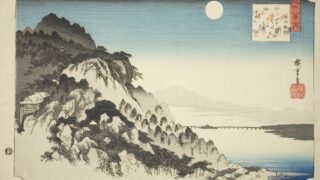
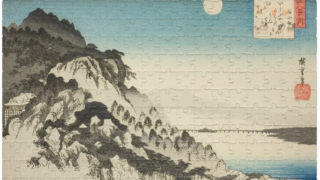
Among the most poetic landscapes created by Utagawa Hiroshige, Autumn Moon at Ishiyama reveals how silence itself can become the subject of art.This print belongs to the classical landscape theme Eight Views of Ōmi, a group of scenes centered around Lake Biwa.For centuries, these locations were celebrated in poetry and painting. Each view captures not just a place, but a particular atmosphere — a moment when landscape, season, and time of day align.In this composition, Hiroshige chooses one of the most contemplative settings:the autumn moon rising above Ishiyama-dera.
Ukiyo-e Landscapes

The Quiet Power of the Sea in Hokusai’s World

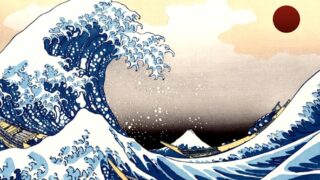
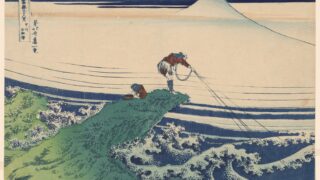
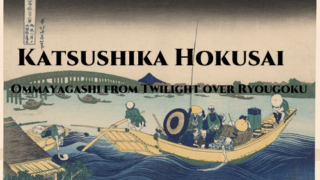
In the art of Katsushika Hokusai, the sea is never merely background.It breathes, moves, and shapes the lives of those who depend upon it.Hokusai lived during Japan’s Edo period, a time when travel expanded and landscapes became central themes in art. While many artists depicted famous places as landmarks, Hokusai approached the natural world differently. His compositions rarely feel static. Waves curl forward, boats lean into the wind, and distant mountains hold their quiet presence against a shifting sky.
Ukiyo-e Landscapes

Hiroshige — The Art of Weather, Silence, and the Road

In the world of Ukiyo-e, few artists understood atmosphere the way Utagawa Hiroshige did.If Hokusai gave us power, structure, and bold presence, Hiroshige gave us distance — and breath.Where others captured events,Hiroshige captured conditions.
Ukiyo-e Landscapes

Katsushika Hokusai — Painting the Eternal Within the Moment

If a single image could hold time itself,what would it look like?A river moving quietly through a town.A fragile boat caught in motion.Mount Fuji standing in the distance.Everything changes —except what does not.This tension between movement and permanence defines the work of Katsushika Hokusai.
Ukiyo-e Landscapes

🌧️ Utagawa Hiroshige — Silence, Weather, and the Poetry of the Road

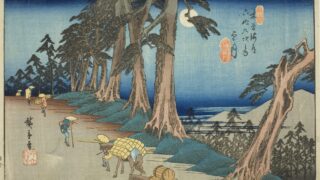
Among the masters of ukiyo-e, Utagawa Hiroshige stands apart for one quiet reason:he painted weather as emotion.Where others emphasized heroes, actors, or dramatic waves, Hiroshige turned his attention to roads, rain, snow, and distant mountains. His art does not shout. It listens.
Ukiyo-e Landscapes

🗻 Snow, Silence, and the Distant Mountain

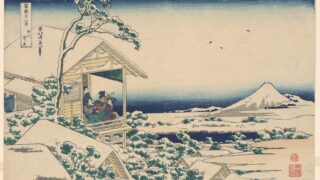
In the vast body of work created by 葛飾北斎, there are images that roar — and images that whisper.When people think of Hokusai, they often recall towering waves or blazing skies. Yet within his celebrated series Thirty-Six Views of Mount Fuji, there are moments of remarkable stillness. Snowy Morning at Koishikawa is one of them.Here, the world is hushed.
Ukiyo-e Landscapes

Utagawa Hiroshige — The Art of Passing Time

Hiroshige did not paint heroes.He did not chase dramatic moments or decisive action.Instead, he chose what passes.Rain crossing a bridge.Snow settling on a road at dusk.Travelers moving quietly through wind and mist.In the ukiyo-e world, Hiroshige stands apart not because his scenes are grand, but because they are gentle. His landscapes rarely demand attention. They invite patience.
Ukiyo-e Landscapes

The World Seen Quietly — Katsushika Hokusai and the Art of Continuation

When people hear the name Katsushika Hokusai,they often think of one image — a towering wave, frozen at the moment before impact.But Hokusai’s world was never about a single moment.It was about continuation.
Ukiyo-e Landscapes

Utagawa Hiroshige — The Artist Who Let the World Breathe

Utagawa Hiroshige did not paint the world as something to conquer.He painted it as something already alive.While many artists of the Edo period focused on people, drama, or power,Hiroshige turned his attention to roads, weather, rivers, and distance.Not as backgrounds — but as the main subject.
Ukiyo-e Landscapes

Katsushika Hokusai — Landscapes That Continue Beyond Time

Katsushika Hokusai is often remembered for movement.Waves that rise.Clouds that twist.Lines that seem alive.Yet what truly defines Hokusai’s work is not motion alone, but time.In his landscapes, time does not rush.It stretches, pauses, and quietly observes human life from a distance.